That first-step agony is stealing your mornings. You’re limping to the bathroom. You’re avoiding walking barefoot. You’re worried the pain will get worse or never go away. Every day starts with the same sharp reminder that something is wrong with your foot.
This pain has specific causes. It’s not random. But it’s fixable. Once you understand why your heel hurts when you wake up, you can take the right steps to stop it.
Morning heel pain stands apart from other foot problems in three key ways:
The pain comes from what happens while you sleep. Your plantar fascia (the thick band of tissue running along your foot’s bottom) shortens and tightens during rest.
When you take those first steps, you’re suddenly stretching that tightened tissue. The fascia pulls against its attachment point on your heel bone. This creates the sharp pain you feel.
As you walk, the fascia gradually stretches back to its normal length. The pain fades. But the damage from repeated stretching and tightening can build up over time.
Repeated microtrauma during daily activities can lead to collagen breakdown, chronic inflammation, or even a shift toward plantar fasciosis, a degenerative version of the condition.
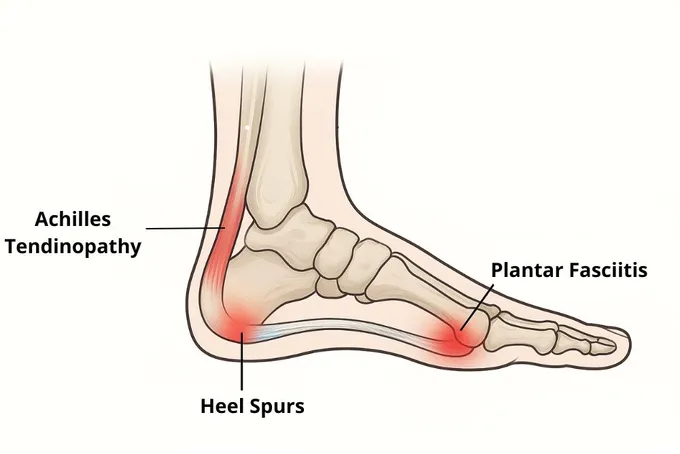
Plantar Fasciitis is the most common cause of acute heel pain in the morning. The plantar fascia becomes inflamed and begins to degenerate [1].
You’ll feel sharp pain in the middle of your heel, right where the fascia attaches to your heel bone. The pain is worst with your first steps and improves with activity.
Achilles tendinopathy affects the thick tendon connecting your calf muscle to your heel bone [2]. The pain sits higher on your heel and extends up into your lower calf.
Unlike plantar fasciitis, this pain gets worse when you point your toes up or rise onto your toes. You might also notice swelling and tenderness along the tendon.
Heel spurs are bony growths that develop on your heel bone in response to ongoing fascia tension [3]. Small spurs cause no pain. Larger ones irritate the surrounding tissue and create sharp pain under your heel. Heel spurs often occur alongside plantar fasciitis. You need an X-ray to confirm their presence.
Several factors increase your chances of waking up with heel pain:
Most morning heel pain responds well to conservative treatment. Here are the most effective approaches:
Focus on the plantar fascia stretch and calf stretches that target the Achilles tendon and increase ankle flexibility. Tight calf muscles and fascia contribute to plantar fasciitis symptoms.
Do this while you’re still in bed. Sit with one leg crossed over the other. Gently pull your toes back toward your shin. You should feel a stretch along your foot’s bottom. Hold for 30 seconds. Repeat 4-5 times.
Also, stretch your calf muscles. Tight calves contribute to plantar fascia problems. Do this stretch several times throughout the day, not just in the morning.
Your shoes need three things: arch support, cushioning, and proper fit. Avoid walking barefoot on hard surfaces. The strain you put on your feet today becomes tomorrow’s morning pain.
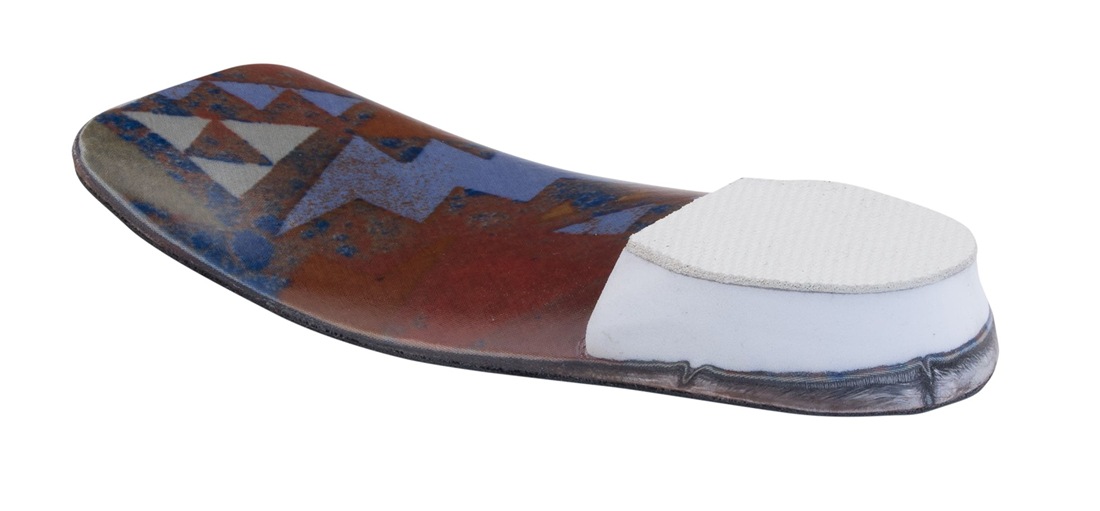
Consider custom orthotics if you have structural foot problems or severe pain. These devices support your arch and reduce strain on the plantar fascia throughout your day [4]. Many people find significant relief from properly fitted orthotics.
Ice, combined with rest and the use of nonsteroidal anti-inflammatory drugs (NSAIDs) like ibuprofen or aspirin, can reduce tissue inflammation and promote healing.
Ice your heel for 15 minutes after activity or standing. This reduces the inflammatory process that occurs after you stress the tissue [5]. Don’t ice for longer than 15 minutes at a time.
Anti-inflammatory medications can help during flare-ups, but save them for severe cases. These medications have side effects. Talk to your doctor before using them regularly.
The best results come from combining these approaches. Stretching, proper footwear, and inflammation control work better than any single treatment.
Most people see improvement within six months of conservative treatment. But if your pain persists or gets worse, medical interventions are available:
ESWT promotes healing in chronic cases by stimulating blood flow and triggering a tissue regenerative response. It’s often used when plantar fasciitis pain has lasted more than six months despite conservative care.
This treatment uses high-energy sound waves to promote tissue healing [6]. It’s safe and effective for chronic plantar fasciitis. A trained medical professional performs the procedure using specialized equipment.
Though effective short-term, repeated steroid injections can lead to plantar fascia rupture, fat pad atrophy, or heel bone weakness.
These injections reduce inflammation directly in the plantar fascia. They’re popular worldwide, but they come with risks [7]. The fascia can rupture after injection. The relief typically lasts about six months. Without addressing the underlying cause, the pain often returns.
Surgery is the last resort after 6-12 months of failed conservative treatment [8]. The procedure involves cutting part of the plantar fascia to relieve tension. While many people get relief, surgery carries risks of infection, damage to surrounding structures, and requires a lengthy recovery time.